Geographical Coverage
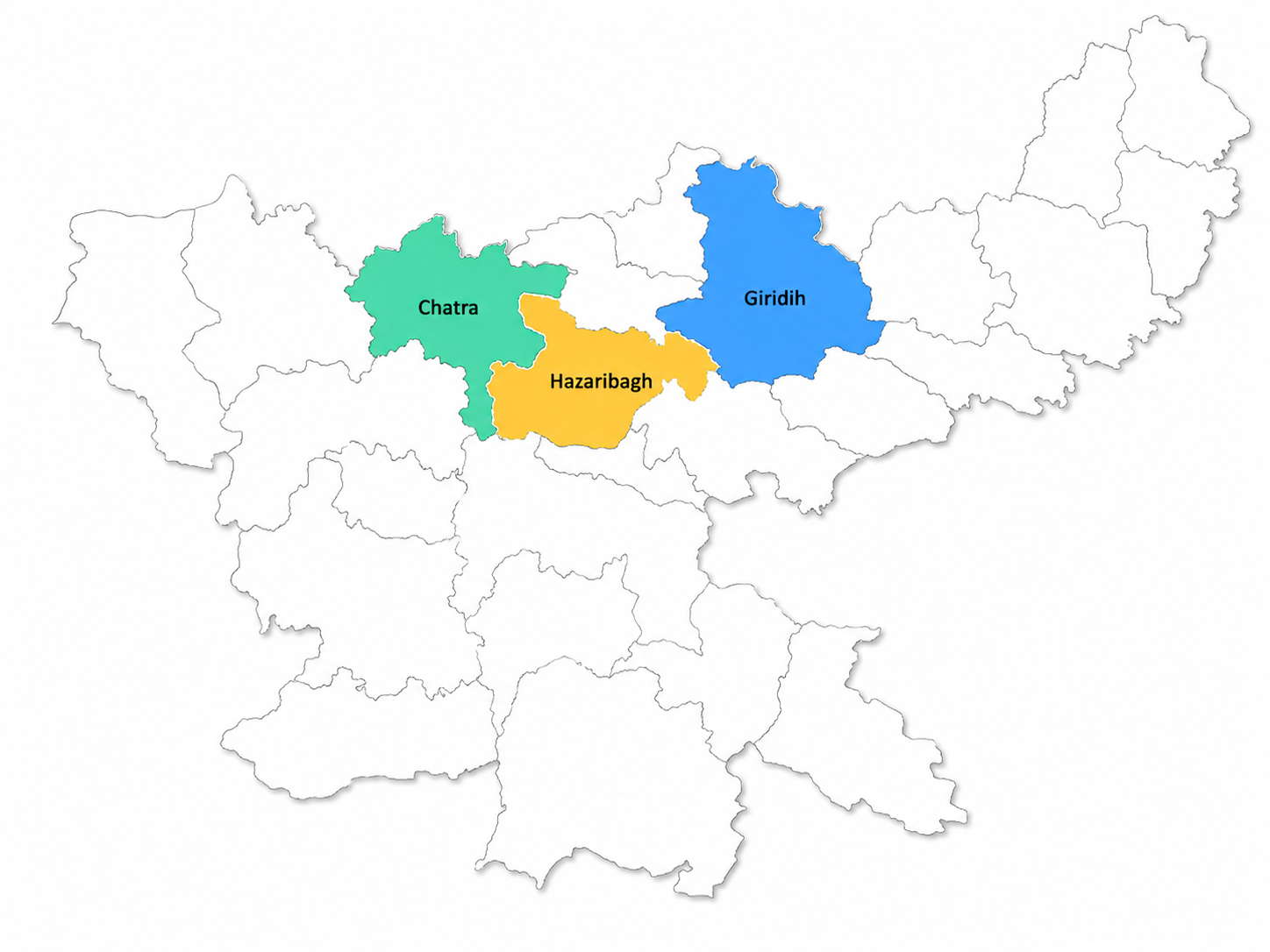
We work across three districts of Jharkhand — Hazaribagh, Chatra, and Giridih — with active efforts underway to expand further.
Where we work
Three districts. One mission.
All three districts are in Jharkhand's central belt — a region with significant tribal population, forest dependence, and chronic gaps in education, health, and livelihood infrastructure.
Hazaribagh
Registered OfficeLongest-running area of work — home to the Foundation's registered and correspondence offices.
Representative Blocks
Work in this district
- SHG formation and strengthening (since 2009)
- Gitanjali Public School (2013–2017)
- Swachh Bharat Mission — sanitation access (2015–2020)
- NABARD Mushroom Cultivation MEDP (2021)
- NABARD Coir/Craft Product Making MEDP (2023)
- Rights Based Approach (RBA) programme (2019–23)
- JVAM — forest rights advocacy (2019–onward)
- CACL — anti-child-labour campaigns (2024–onward)
- We the People Abhiyan (2025–onward)
Office Addresses
Registered Office
Village and Post – Gorhar, Barkattha, Dist. Hazaribagh, Jharkhand – 825323
Correspondence Office
Dewangana Chowk, Michiyari Lane, Korrah, Dist. Hazaribagh – 825301, Jharkhand
Chatra
Active Programme DistrictActive livelihood and SHG programming district, with significant tribal population and forest-rights work.
Representative Blocks
Work in this district
- SHG formation and livelihood support
- NABARD LEDP — Bamboo Handicraft Programme
- Forest Rights Act (FRA) claims support via JVAM
- WASH and health awareness camps
- Women and child development programmes
Giridih
Active Programme DistrictActive SHG and livelihood programming district with a focus on skill development and enterprise.
Representative Blocks
Work in this district
- SHG formation and strengthening
- SIDBI — Skill and Enterprise Development (2022–23)
- Climate-resilient agriculture support
- Social and legal empowerment awareness
- Material aid distribution (Goonj partnership)
The Foundation has active efforts underway to expand its geographic footprint beyond these three districts — prioritising adjacent districts with similar socioeconomic profiles and existing network connections.